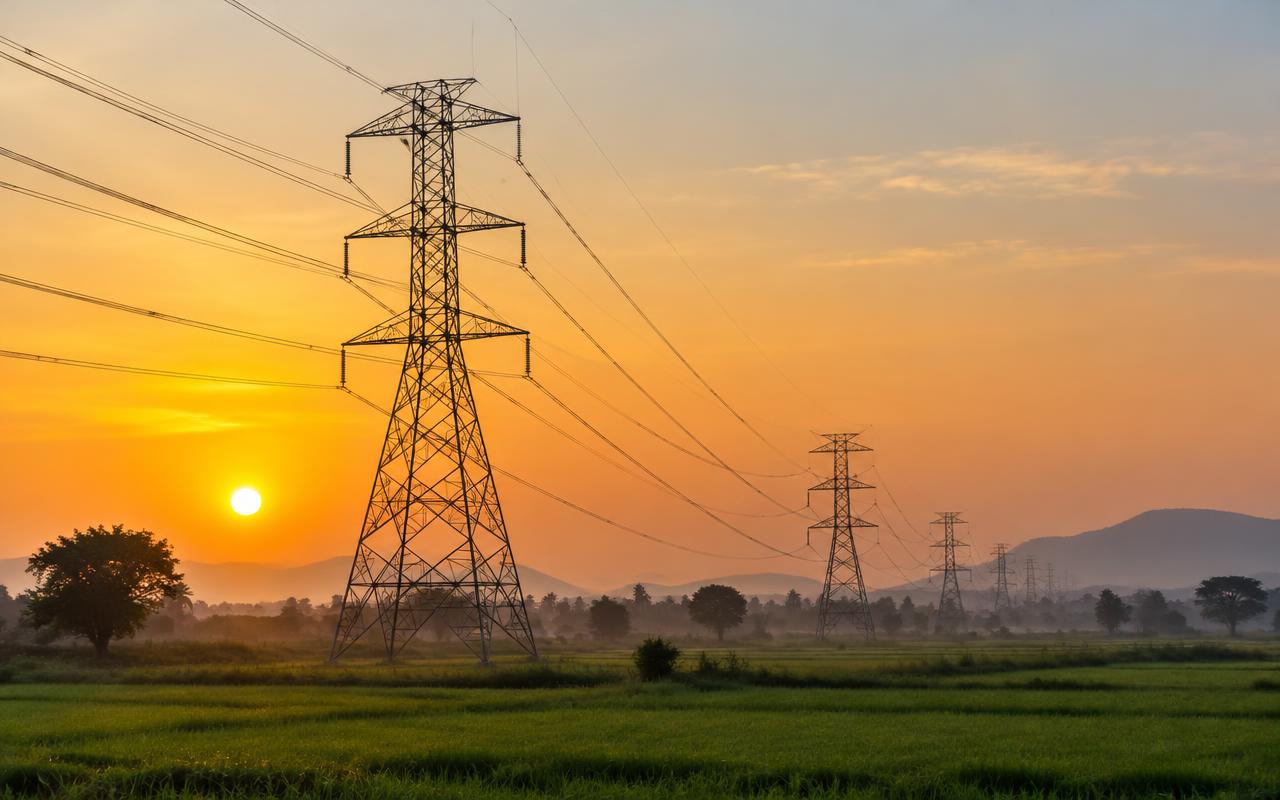
Power-Ready Land for Data Centres
Parcels next to 132/220/400 kV substations where large power can be connected quickly.
What this land type gives you — and what it asks of you
When to choose power-ready land — and when not to
Power-ready means a written electrical position, not a substation visible from the plot: confirmed transformer headroom, spare bays and a short route to your connection point.
Why teams choose power-ready land
- Energisation stops being the blocker
A short dedicated line or a direct bay connection removes the item that usually sets a data-centre programme's end date.
- Capacity you can evidence
Spare bays and transformer headroom can be confirmed by the utility in writing before you commit to the land.
- Phased MW growth
A strong node supports later phases without opening a second corridor or re-running the whole connection process.
- Easier open access and green power
Wheeling renewable energy and arranging open-access supply are simpler where the connection point is strong.
- Dual-feed potential
Some nodes allow supply from two sources or two transformers, which materially improves the resilience story.
What to check before you sign
- Headroom is first-come
Another large consumer can book the bays while you negotiate. A sanction letter matters more than a site visit.
- Corridors eat usable area
Existing line routes, tower bases and right-of-way strips remove developable land and dictate where halls can sit.
- Clearances constrain the layout
Statutory clearances and line-crossing rules restrict building heights and the position of the power yard and fuel storage.
- The land may still be agricultural
Power-adjacent parcels are frequently farmland, so NA or change-of-land-use approval still has to run.
- Sellers know what it is worth
Pricing carries a clear premium for the electrical position, and strong nodes rarely come with a motivated seller.
Getting power-ready land data-centre ready
Six stages, run in parallel wherever the approvals allow it. You get a written position on power and title before any money is committed.
- 01
Node screening
We identify 66, 132, 220 and 400 kV nodes where transformer headroom and spare bays genuinely exist, not just where lines pass.
- 02
Written capacity confirmation
A feasibility or load-sanction letter from the utility — not a verbal assurance — is the gate before any land commitment.
- 03
Corridor and right-of-way mapping
Line routes, tower setbacks and crossing permissions are mapped so the usable building envelope is known upfront.
- 04
Land tie-up on power conditions
The agreement is written so your obligation turns on the sanction and connectivity actually being granted.
- 05
Conversion if required
Many power-adjacent parcels remain agricultural, so NA or change-of-land-use approval runs in parallel.
- 06
Connection agreement and energisation
Bay allocation, metering, protection and the connection agreement take the site through to live power.
Rule of thumb: the checklist opposite is what moves power-ready land from an interesting parcel to a buildable site. We map the owner, fee and realistic duration of each item before you sign.
Approvals and documents for power-ready land
Exact names and sequencing differ by state and local authority. This is the checklist we work through, and the one your lender will expect to see closed out.
- Feasibility or load-sanction letter from the discom or transmission utility
- Connectivity and bay allocation agreement
- Right-of-way and line-crossing permissions for the connection route
- Land-use conversion if the parcel is still agricultural
- Layout sanction respecting transmission setbacks and clearances
- Fire NOC and state pollution control board consents
- Metering, protection and relay coordination approvals
- Open-access or captive-generation registration if used
All six land types, side by side
Most briefs end up comparing two or three of these. Your row is highlighted — follow any other link to see that route in the same detail.
| Land type | Typical parcel | Power connection | Approvals | Cost profile | Best for |
|---|---|---|---|---|---|
| Industrial Land | 5–50 acres | 6–12 months (HT/EHV) | Low — already industrial | Moderate, state-benchmarked | Colocation and enterprise builds |
| SEZ Land | 2–25 acres in-zone | 3–9 months | Moderate — zone plus unit approvals | Lease premium plus zone charges | Export-oriented cloud and hosting |
| IT Park Land | 1–10 acres | 3–9 months | Low — layout pre-sanctioned | Highest per acre | Edge and city-proximate colocation |
| Agricultural Land Conversion | 10–100+ acres | 12–24 months | High — conversion is critical path | Lowest land, highest process | Hyperscale campuses with runway |
| Brownfield Sites | 2–20 acres, built-up | 1–6 months on existing load | Moderate — change of activity | Mid; remediation is the swing | Speed-to-market retrofits |
| Power-Ready LandYou are here | 10–60 acres | Fastest at scale — 66/132/220 kV | Low to moderate | Premium for the power position | Large MW blocks, schedule-driven |
Indicative ranges for planning conversations only. Parcel size, connection timeline and approval burden are always confirmed site by site with the relevant authority and utility.
What a deal on power-ready land usually needs
The work below is what turns this land type into a buildable site. Engage the whole sequence or just the piece you are missing.
Top cities for power-ready land
We source and verify this land type across 262+ Indian cities. Start with a market below, or tell us your megawatt and acreage target and we will come back with matching parcels.
Power-Ready Land: frequently asked questions
A confirmed electrical position: a nearby 66, 132, 220 or 400 kV substation with transformer headroom and spare bays, a short connection route, and a utility letter confirming feasibility for your load. Proximity on a map without that letter is not power-ready.
Tell us your MW, acreage and timeline
We reply within one working day with matching parcels and a clear next step.