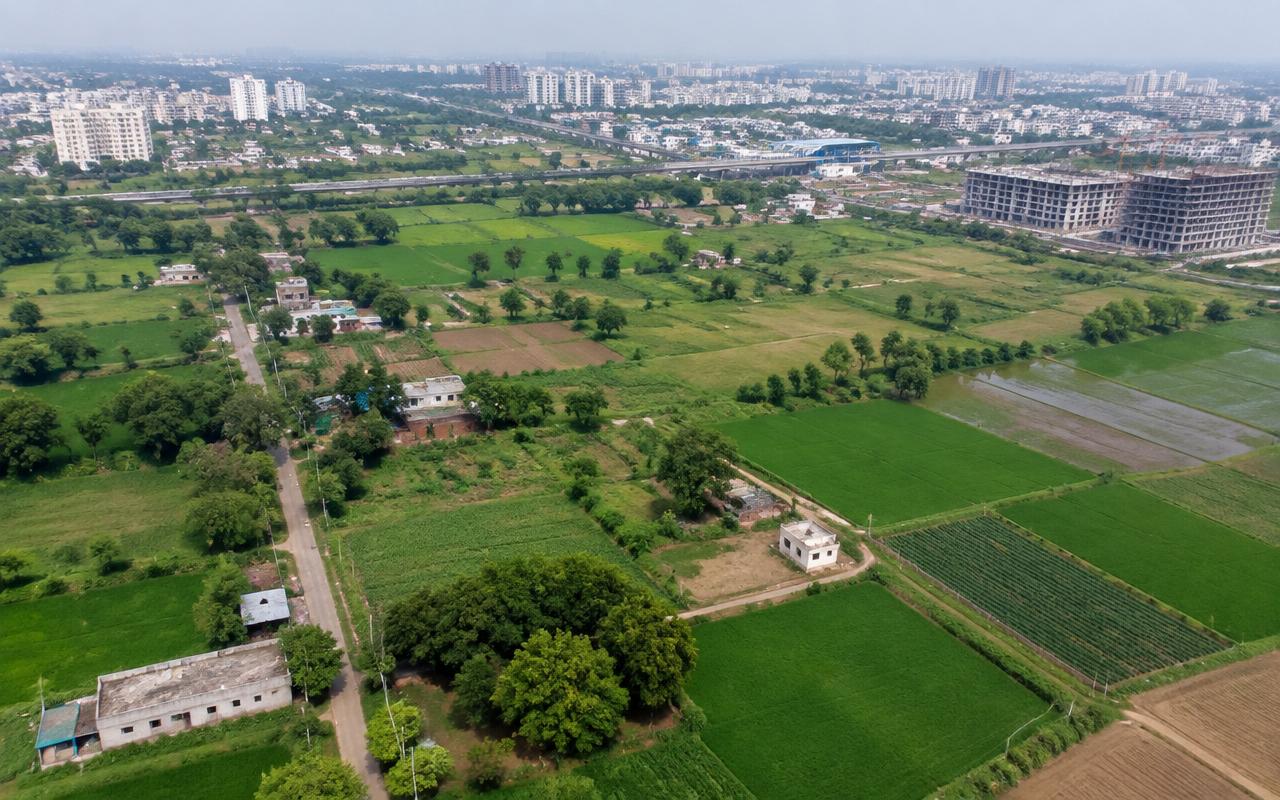
Agricultural Land Conversion for Data Centres
Lower-cost farmland converted to non-agricultural use — great value with the right approvals strategy.
What this land type gives you — and what it asks of you
When to choose agricultural land conversion — and when not to
Converted farmland is the lowest-cost entry and usually the only way to assemble a true campus — provided you treat NA or change-of-land-use approval as the project's critical path.
Why teams choose agricultural land conversion
- Lowest cost per acre
Entry pricing is the lowest of the six routes, and the conversion premium is usually small against total project cost.
- Genuine campus scale
Contiguous parcels large enough for a phased 50 MW-plus campus are realistically only available on agricultural land.
- A blank master plan
You set the layout: hall phasing, power yard position, water strategy, security setback, laydown areas and future expansion pads.
- Room for on-site generation
Space for rooftop and ground-mount solar, battery storage and a dedicated switchyard is available in a way city plots cannot match.
- Ahead of the infrastructure curve
Many candidate parcels sit near new expressways and planned transmission corridors, which is where the next cluster of capacity lands.
What to check before you sign
- Conversion is the critical path
NA or change-of-land-use timelines vary widely by state and district. Everything else in the programme waits on that order.
- Who may buy is restricted
Several states limit purchase of agricultural land, set ceiling limits, or require agriculturist status, and categories such as tribal land carry separate protections.
- Fragmented title
Assembling many small holdings pulls succession, tenancy and mutation issues into the title chain, and revenue records may not reconcile with survey.
- Overlays and zoning
Green belt, canal command area, wetland, CRZ and flood-plain designations can block development regardless of a willing seller.
- Nothing at the boundary
Access road, water, drainage and a feeder or dedicated substation all have to be built, and a holdout owner can break a parcel once word spreads.
Getting agricultural land conversion data-centre ready
Six stages, run in parallel wherever the approvals allow it. You get a written position on power and title before any money is committed.
- 01
Record and title diligence
Revenue records, the mutation chain, tenancy entries and any restriction on the parcel are examined before anything is negotiated.
- 02
Eligibility and ceiling check
We confirm the purchase structure is permissible in that state — who may buy, how much, and under what conditions.
- 03
Quiet aggregation
Holdings are tied up in parallel with escrow-backed agreements, so a single holdout cannot break the parcel or reset the price.
- 04
Conversion application
The NA or change-of-land-use application goes to the collector or planning authority with the layout and conversion premium.
- 05
Layout sanction and NOCs
Layout approval plus irrigation, revenue, drainage and environmental NOCs as the site and the state require.
- 06
Infrastructure and power
Access road, water, drainage and a new feeder or dedicated substation are built alongside campus phase one.
Rule of thumb: the checklist opposite is what moves agricultural land conversion from an interesting parcel to a buildable site. We map the owner, fee and realistic duration of each item before you sign.
Approvals and documents for agricultural land conversion
Exact names and sequencing differ by state and local authority. This is the checklist we work through, and the one your lender will expect to see closed out.
- 30-year title search across every holding in the parcel
- Revenue record, mutation chain and tenancy verification
- Purchaser-eligibility and land-ceiling clearance where applicable
- NA or change-of-land-use order from the collector or planning authority
- Conversion premium and development charges paid
- Layout and building-plan sanction
- Irrigation, drainage and environmental NOCs as applicable
- New feeder or substation agreement with the transmission utility
All six land types, side by side
Most briefs end up comparing two or three of these. Your row is highlighted — follow any other link to see that route in the same detail.
| Land type | Typical parcel | Power connection | Approvals | Cost profile | Best for |
|---|---|---|---|---|---|
| Industrial Land | 5–50 acres | 6–12 months (HT/EHV) | Low — already industrial | Moderate, state-benchmarked | Colocation and enterprise builds |
| SEZ Land | 2–25 acres in-zone | 3–9 months | Moderate — zone plus unit approvals | Lease premium plus zone charges | Export-oriented cloud and hosting |
| IT Park Land | 1–10 acres | 3–9 months | Low — layout pre-sanctioned | Highest per acre | Edge and city-proximate colocation |
| Agricultural Land ConversionYou are here | 10–100+ acres | 12–24 months | High — conversion is critical path | Lowest land, highest process | Hyperscale campuses with runway |
| Brownfield Sites | 2–20 acres, built-up | 1–6 months on existing load | Moderate — change of activity | Mid; remediation is the swing | Speed-to-market retrofits |
| Power-Ready Land | 10–60 acres | Fastest at scale — 66/132/220 kV | Low to moderate | Premium for the power position | Large MW blocks, schedule-driven |
Indicative ranges for planning conversations only. Parcel size, connection timeline and approval burden are always confirmed site by site with the relevant authority and utility.
What a deal on agricultural land conversion usually needs
The work below is what turns this land type into a buildable site. Engage the whole sequence or just the piece you are missing.
Top cities for agricultural land conversion
We source and verify this land type across 262+ Indian cities. Start with a market below, or tell us your megawatt and acreage target and we will come back with matching parcels.
Agricultural Land Conversion: frequently asked questions
The owner or buyer applies to the collector or the planning authority for non-agricultural (NA) use or a change of land use, submitting the proposed layout and paying a conversion premium. Once the order is issued the parcel can be developed. Timelines vary considerably by state and district, which is why conversion sits on the critical path.
Tell us your MW, acreage and timeline
We reply within one working day with matching parcels and a clear next step.