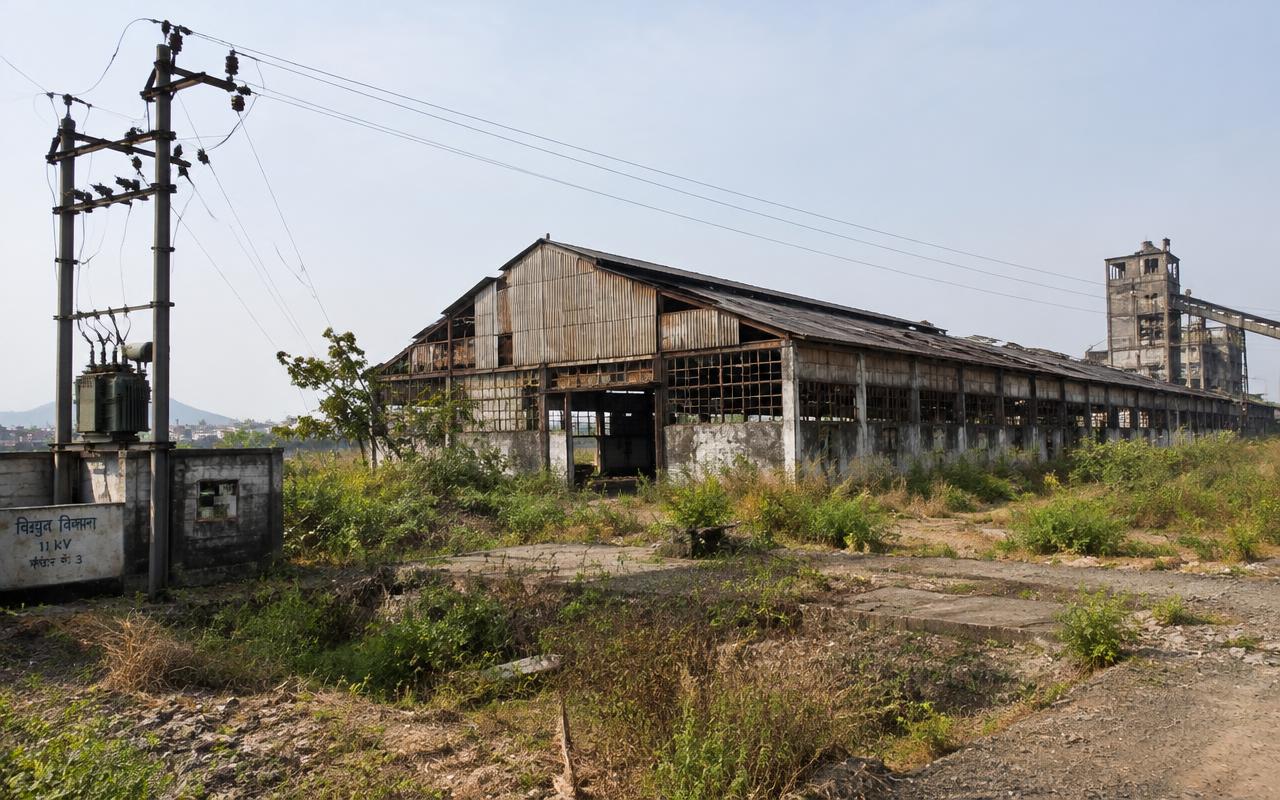
Brownfield Sites for Data Centres
Old factories and warehouses with existing power connections that can be re-used for data centres.
What this land type gives you — and what it asks of you
When to choose brownfield sites — and when not to
A closed factory with a live sanctioned load is often the fastest route to first megawatts in India — if the environmental and structural legacy is priced before you sign.
Why teams choose brownfield sites
- Existing sanctioned load
Re-assigning an industrial unit's sanctioned HT load and its switchyard removes the single longest item in a data-centre programme.
- Industrial use already settled
No conversion, and road access, a water line and storm drainage are usually already at the boundary.
- Inside the urban envelope
Closed units are typically in older industrial belts near cities, which is good for latency, staffing and contractor availability.
- Some structures are reusable
Offices, security blocks, stores and BMS space can often be refurbished even when the production shed cannot host a hall.
- Motivated sellers
Owners of non-operating assets, receivers and liquidators are usually transacting to exit, which can create a genuine pricing opportunity.
What to check before you sign
- Environmental legacy
Soil and groundwater contamination, buried tanks and pipework, asbestos and residual hazardous waste all need investigation before price is fixed.
- Old slabs rarely take a data hall
Floor loading, vibration and height requirements mean reuse of the production structure is usually cosmetic at best.
- Demolition is regulated
Permitted demolition, debris handling, asbestos removal and hazardous-waste disposal are governed processes with real cost and schedule.
- Hidden claims on closed units
Labour and statutory dues, lender charges, and receiver or liquidator processes can all sit on a shut factory.
- Corporate title chains
Title may run through a company, a receiver or an official liquidator, each with its own approval route and timetable.
Getting brownfield sites data-centre ready
Six stages, run in parallel wherever the approvals allow it. You get a written position on power and title before any money is committed.
- 01
Screening and site history
Previous activity, consent history and the closure record tell us what contamination and compliance legacy to expect.
- 02
Sanctioned-load verification
The discom confirms the existing sanctioned load, the switchyard's condition and whether it can be re-assigned to you.
- 03
Environmental assessment
Soil and groundwater sampling, buried tanks, asbestos and hazardous-waste stock are investigated before the price is fixed.
- 04
Structure and geotech review
Slab capacity, frame condition and foundations are tested against data-hall floor loading to decide reuse versus demolition.
- 05
Transfer and change of activity
The transfer closes — sometimes through a company, receiver or liquidator process — together with change-of-activity approvals.
- 06
Remediation and rebuild
Permitted demolition, compliant waste disposal and remediation, then the new hall on a verified power position.
Rule of thumb: the checklist opposite is what moves brownfield sites from an interesting parcel to a buildable site. We map the owner, fee and realistic duration of each item before you sign.
Approvals and documents for brownfield sites
Exact names and sequencing differ by state and local authority. This is the checklist we work through, and the one your lender will expect to see closed out.
- Title chain including any corporate, receiver or liquidator transfer
- Search for labour, statutory and lender claims on the unit
- Consent and closure history review with the state pollution control board
- Hazardous-waste authorisation and disposal manifests
- Asbestos survey and handling plan
- Demolition permission from the local body
- Change-of-activity and revised occupancy approval
- Sanctioned-load transfer and fresh consent to establish
All six land types, side by side
Most briefs end up comparing two or three of these. Your row is highlighted — follow any other link to see that route in the same detail.
| Land type | Typical parcel | Power connection | Approvals | Cost profile | Best for |
|---|---|---|---|---|---|
| Industrial Land | 5–50 acres | 6–12 months (HT/EHV) | Low — already industrial | Moderate, state-benchmarked | Colocation and enterprise builds |
| SEZ Land | 2–25 acres in-zone | 3–9 months | Moderate — zone plus unit approvals | Lease premium plus zone charges | Export-oriented cloud and hosting |
| IT Park Land | 1–10 acres | 3–9 months | Low — layout pre-sanctioned | Highest per acre | Edge and city-proximate colocation |
| Agricultural Land Conversion | 10–100+ acres | 12–24 months | High — conversion is critical path | Lowest land, highest process | Hyperscale campuses with runway |
| Brownfield SitesYou are here | 2–20 acres, built-up | 1–6 months on existing load | Moderate — change of activity | Mid; remediation is the swing | Speed-to-market retrofits |
| Power-Ready Land | 10–60 acres | Fastest at scale — 66/132/220 kV | Low to moderate | Premium for the power position | Large MW blocks, schedule-driven |
Indicative ranges for planning conversations only. Parcel size, connection timeline and approval burden are always confirmed site by site with the relevant authority and utility.
What a deal on brownfield sites usually needs
The work below is what turns this land type into a buildable site. Engage the whole sequence or just the piece you are missing.
Top cities for brownfield sites
We source and verify this land type across 262+ Indian cities. Start with a market below, or tell us your megawatt and acreage target and we will come back with matching parcels.
Brownfield Sites: frequently asked questions
Because an existing sanctioned load and switchyard can frequently be re-assigned, which removes the longest item in a data-centre programme. The land use is already industrial, and road, water and drainage are usually at the boundary rather than kilometres away.
Tell us your MW, acreage and timeline
We reply within one working day with matching parcels and a clear next step.